Sunday, September 10, 2006
Saturday, September 02, 2006
Wednesday, August 30, 2006
Tuesday, August 22, 2006
Wednesday, August 16, 2006
A symphony of civilizations
"It is the studio of an artist in the 17th-century Netherlands. In the foreground there are a tapestry, an empty chair and a table. A seated painter is trying to catch the essence of his model, a demure young woman, Clio, the Greek muse of history. On the wall, as a backdrop, is a large map of the Seventeen Provinces printed in Amsterdam. The scene is quiet but inspiring."
"It is the studio of an artist in the 17th-century Netherlands. In the foreground there are a tapestry, an empty chair and a table. A seated painter is trying to catch the essence of his model, a demure young woman, Clio, the Greek muse of history. On the wall, as a backdrop, is a large map of the Seventeen Provinces printed in Amsterdam. The scene is quiet but inspiring."

Monday, August 14, 2006
Thursday, July 20, 2006


Sunday, July 16, 2006
Monday, July 10, 2006
As a most irksome matter, I fired my memory module with manual memory timing. Now I must RMA both the motherboard and the memory. Curses! Why must my attempts to build a new computer be foiled at every turn?!
Currently contemplating getting a black 13.3" Mac Book sometime in August when Merom comes out.
Currently contemplating getting a black 13.3" Mac Book sometime in August when Merom comes out.
Went to Chicago this last weekend. Tried Taste of Chicago, which is good but expensive. Got soaked in the two public fountain columns. The faces on them reminded me of Bladerunner. The city is lovely. I wouldn't mind living here if I am working for the right company. Unlike other city archtectures of empty downtowns, Chicago has residential complexes throughout the entire city. Which translates into more public events, more social gatherings, and more culture. At night, watched the Orchestra play "Battleship Potemkin" in the open air concert stage. Later watched fireworks at Navy Pier.
Repaired to a suburb of Chicago at dawn and slept wondering when was the last time I went to bed with the windows open.
Went to Chinatown the next morning and ate at Joy Yee's, which tastes even better than the food in Houston. The picturesque buildings of the Chinatown unsettled me somehow. Especially this one building facing the new plaza... There is something about it that gives me pause. Old Chinatown reminded me of the non-existent spaces between the buildings.
Repaired to a suburb of Chicago at dawn and slept wondering when was the last time I went to bed with the windows open.
Went to Chinatown the next morning and ate at Joy Yee's, which tastes even better than the food in Houston. The picturesque buildings of the Chinatown unsettled me somehow. Especially this one building facing the new plaza... There is something about it that gives me pause. Old Chinatown reminded me of the non-existent spaces between the buildings.
Saturday, June 17, 2006
Thursday, June 15, 2006
LRB | Alain Supiot : The Condition of France
"Having made the fight against delinquency the main plank of his electoral programme, he (Nicolas Sarkozy) had referred to young people in the banlieues as ‘riff-raff’ whom he intended to ‘power-hose’ off the streets. The fact that a minister could talk like a gangster and so put a match to the powder that had long been collecting in the most deprived neighbourhoods of the Republic, is not simply a sign of incompetence. It is first and foremost a sign that an age-old achievement of our Western juridical systems – the distinction between a public office and the person who occupies it – is being called into question."
"Having made the fight against delinquency the main plank of his electoral programme, he (Nicolas Sarkozy) had referred to young people in the banlieues as ‘riff-raff’ whom he intended to ‘power-hose’ off the streets. The fact that a minister could talk like a gangster and so put a match to the powder that had long been collecting in the most deprived neighbourhoods of the Republic, is not simply a sign of incompetence. It is first and foremost a sign that an age-old achievement of our Western juridical systems – the distinction between a public office and the person who occupies it – is being called into question."
Learning Arabic in France
But the ‘first true Orientalist’ according to Irwin was Guillaume Postel, who travelled to Constantinople in 1535 on a French royal commission to collect Eastern manuscripts, and promptly learned Arabic, Turkish and Coptic (among other languages) to add to the Hebrew he had mastered as a schoolboy. Postel wasn’t a Christian evangelist: his beliefs were weirder. They included the opinion that world peace could be achieved if everybody spoke Hebrew; and a conviction that he had met the Shekinah (a manifestation of divinity) in the form of a Venetian woman whose X-ray vision allowed her to look into the Earth’s core and see Satan. For this he was officially declared insane (but not a heretic) by the Inquisition in Venice. He spent much of his tenure as the Collège de France’s first professor of Arabic comfortably incarcerated in a Paris asylum.
Two hundred years later, it was not much easier to learn Arabic in France.
Two hundred years later, it was not much easier to learn Arabic in France.

Tuesday, June 13, 2006
Sunday, June 11, 2006
Wednesday, June 07, 2006
Tuesday, May 30, 2006
Lost in translation
"An English couple have a child. After the birth, medical tests reveal that the child is normal, apart from the fact that it is German. This, however, should not be a problem. There is nothing to worry about. As the child grows older, it dresses in lederhosen and has a pudding bowl haircut, but all its basic functions develop normally. It can walk, eat, sleep, read and so on, but for some reason the German child never speaks. The concerned parents take it to the doctor, who reassures them that as the German child is perfectly developed in all other areas, there is nothing to worry about and that he is sure the speech faculty will eventually blossom. Years pass. The German child enters its teens, and still it is not speaking, though in all other respects it is fully functional. The German child's mother is especially distressed by this, but attempts to conceal her sadness. One day she makes the German child, who is now 17 years old and still silent, a bowl of tomato soup, and takes it through to him in the parlour where he is listening to a wind-up gramophone record player. Soon, the German child appears in the kitchen and suddenly declares, "Mother. This soup is a little tepid." The German child's mother is astonished. "All these years," she exclaims, "we assumed you could not speak. And yet all along it appears you could. Why? Why did you never say anything before?" "Because, mother," answers the German child, "up until now, everything has been satisfactory."
"An English couple have a child. After the birth, medical tests reveal that the child is normal, apart from the fact that it is German. This, however, should not be a problem. There is nothing to worry about. As the child grows older, it dresses in lederhosen and has a pudding bowl haircut, but all its basic functions develop normally. It can walk, eat, sleep, read and so on, but for some reason the German child never speaks. The concerned parents take it to the doctor, who reassures them that as the German child is perfectly developed in all other areas, there is nothing to worry about and that he is sure the speech faculty will eventually blossom. Years pass. The German child enters its teens, and still it is not speaking, though in all other respects it is fully functional. The German child's mother is especially distressed by this, but attempts to conceal her sadness. One day she makes the German child, who is now 17 years old and still silent, a bowl of tomato soup, and takes it through to him in the parlour where he is listening to a wind-up gramophone record player. Soon, the German child appears in the kitchen and suddenly declares, "Mother. This soup is a little tepid." The German child's mother is astonished. "All these years," she exclaims, "we assumed you could not speak. And yet all along it appears you could. Why? Why did you never say anything before?" "Because, mother," answers the German child, "up until now, everything has been satisfactory."
Monday, May 22, 2006
Wednesday, May 17, 2006
Monday, May 15, 2006
Monday, May 08, 2006
Last word - Books - Times Online
"Tightly plotted Has a beginning and a middle, and you find out whodunnit at the end."
"Tightly plotted Has a beginning and a middle, and you find out whodunnit at the end."
Thursday, May 04, 2006
Tuesday, May 02, 2006
Essays: 'Hammer & tickle' by Ben Lewis | Prospect Magazine May 2006 issue 122
"It was in Romania, while making a film about Ceausescu, that I first stumbled across the historical legacy of the communist joke. There I learned that a clerk from the Bucharest transport system, Calin Bogdan Stefanescu, had spent the last ten years of Ceausescu's regime collecting political jokes. He noted down which joke he heard and when, and analysed his total of over 900 jokes statistically. He measured the time gap between a political event and a joke about that event, and then drew up a graph measuring the varying velocity of Romanian communist jokes. He was also able to assert—somewhat tenuously—that there was a link between jokes and the fall of Ceausescu, since jokes about the leader doubled in the last three years of the regime. The story of Stefanescu, the statistician of jokes, was, ironically, much funnier than the jokes themselves."
"It was in Romania, while making a film about Ceausescu, that I first stumbled across the historical legacy of the communist joke. There I learned that a clerk from the Bucharest transport system, Calin Bogdan Stefanescu, had spent the last ten years of Ceausescu's regime collecting political jokes. He noted down which joke he heard and when, and analysed his total of over 900 jokes statistically. He measured the time gap between a political event and a joke about that event, and then drew up a graph measuring the varying velocity of Romanian communist jokes. He was also able to assert—somewhat tenuously—that there was a link between jokes and the fall of Ceausescu, since jokes about the leader doubled in the last three years of the regime. The story of Stefanescu, the statistician of jokes, was, ironically, much funnier than the jokes themselves."

Tuesday, April 25, 2006
Monday, April 17, 2006
Registration time
A time of farewells. Even though we've been only here for 3 years, people are already leaving. The sad part is that they became good friends just recently. And just like that, we meet and then we disburse into the world. I hate saying goodbyes, especially when you might never see them again in this life time.
A time of farewells. Even though we've been only here for 3 years, people are already leaving. The sad part is that they became good friends just recently. And just like that, we meet and then we disburse into the world. I hate saying goodbyes, especially when you might never see them again in this life time.
Saturday, April 15, 2006
Wednesday, April 12, 2006

Stravinsky, Schoenberg and Alan Berg in class. Heard "Rite of Spring", No. 8 "Night" and watched parts of "Wozzeck". I can't help but be fascinated by these three pieces, especially the scene in wozzeck when the protagonist returns to the river bank:
"Murder! Murder!"
"They are on to me! Wait, that was my own voice, ha..haha"
"Murder! Murder!"
Death is a master from Germany indeed.
"Murder! Murder!"
"They are on to me! Wait, that was my own voice, ha..haha"
"Murder! Murder!"
Death is a master from Germany indeed.
Monday, April 10, 2006
Sunday, April 09, 2006
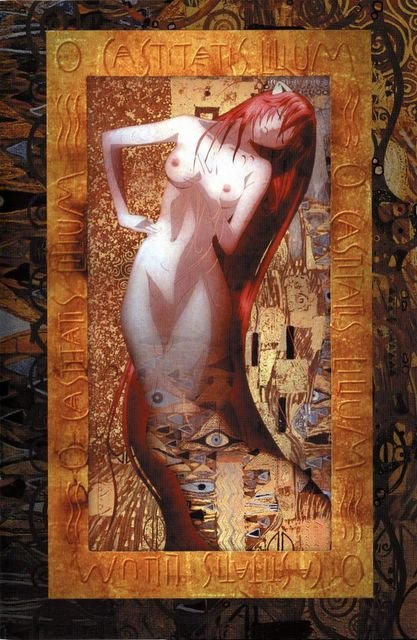
Elfen Lied and Gustav Klimt
Elfen Lied and Gustav Klimt
Elfen Lied (pronounced 'lead') it is an anime redemption story with your typical senseless dismembered body parts and a love triangle that (conveiently) keeps the protagonist safe. In actuality the whole series is a gigantic fan service with pathetic attempts to build a plot. It suffers the same problems that animes today seems to suffer. They include, but not exclusively: attempts to build humor by showing women in various stages of undressing, use of German to cover ignorance and superficiality of the artists, and flashbacks.
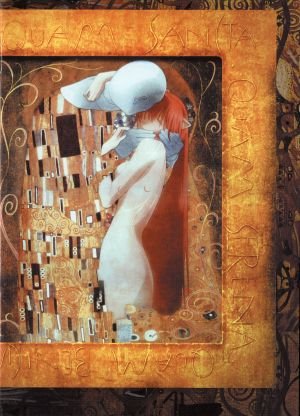
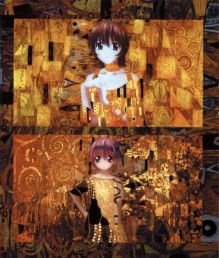
The only redeeming quality is the opening music cutscene with the main characters transposed into Gustav Klimt's pictures.


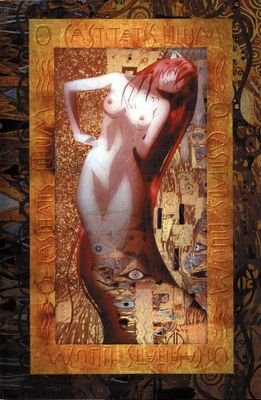
Elfen Lied (pronounced 'lead') it is an anime redemption story with your typical senseless dismembered body parts and a love triangle that (conveiently) keeps the protagonist safe. In actuality the whole series is a gigantic fan service with pathetic attempts to build a plot. It suffers the same problems that animes today seems to suffer. They include, but not exclusively: attempts to build humor by showing women in various stages of undressing, use of German to cover ignorance and superficiality of the artists, and flashbacks.
The only redeeming quality is the opening music cutscene with the main characters transposed into Gustav Klimt's pictures.

Thursday, April 06, 2006
Tuesday, April 04, 2006
Saturday, April 01, 2006
Friday, March 31, 2006
Wednesday, March 29, 2006
Tuesday, March 28, 2006
Rainy day
Last night/ this morning, my LCD sponaneously combusted. I was playing Oblivion when the whole screen start flickering black and white and smoke started billowing out of it.
Rainy day today; UT is on a hill so every step is an oncoming stream of water. Decided to skip class so I can get back to the apartment and empty out the gold fish in my shoe.
Last night/ this morning, my LCD sponaneously combusted. I was playing Oblivion when the whole screen start flickering black and white and smoke started billowing out of it.
Rainy day today; UT is on a hill so every step is an oncoming stream of water. Decided to skip class so I can get back to the apartment and empty out the gold fish in my shoe.
Wednesday, March 22, 2006
Sunday, March 19, 2006
Saturday, March 18, 2006
Friday, March 17, 2006
Monday, March 13, 2006
Stem cell experts seek rabbit-human embryo
· Hybrid will hasten research, say scientists
· Grey area exposed in regulation procedures
Ian Sample, science correspondent
Friday January 13, 2006
The Guardian
British scientists are seeking permission to create hybrid embryos in the lab by fusing human cells with rabbit eggs. If granted consent, the team will use the embryos to produce stem cells that carry genetic defects, in the hope that studying them will help understand the complex mechanisms behind incurable human diseases.
The proposal drew strong criticism from opponents to embryo research who yesterday challenged the ethics of the research and branded the work repugnant.
Plans for the experiments have been put forward by Professor Chris Shaw, a neurologist and expert in motor neurone disease at King's College London, and Professor Ian Wilmut, the Edinburgh University-based creator of Dolly the sheep, as a way of overcoming the shortage of fresh human eggs available for research.
"The fertility of rabbits is legendary," said Prof Shaw. "The most important thing is that with animal eggs, we have a much better chance of generating stem cells and if we wait for human eggs, it's going to be maybe a decade before we can do this. If we can use animal eggs, we could maybe have stem cells within one or two years," he added.
Scientists use eggs in research to create cloned embryos, from which they harvest stem cells. By producing stem cells that carry the genetic defects of diseases, researchers believe they will be able to unravel how a cell's molecular machinery goes wrong, potentially leading to new cures for disease. But the research is progressing slowly, hampered by a severe shortage of "spare" eggs donated by couples undergoing fertility treatment.
Prof Shaw's team will need a licence from the Human Fertilisation and Embryology Authority before they are allowed to pursue the research. "As with all research involving human embryos, the research team would have to show that the research is both necessary and desirable, and that any embryo created could not be allowed to develop for longer than 14 days or be implanted in a woman," said Dr Chris O'Toole, head of research regulation at the HFEA.
If the researchers are granted consent, they will not be the first to fuse human cells with rabbit eggs. In 2003, Huizhen Sheng at Shanghai Second Medical University published work in which she claimed to have extracted stem cells from hybrid embryos made from rabbit eggs.
To make a hybrid embryo, a human skin cell would be taken from a person with motor neurone disease and injected into a hollowed-out rabbit egg. The resulting embryo would contain only a tiny amount of rabbit DNA in a microscopic structure that generates energy in the cell. The rest of the DNA would be human. If the experiment is successful, within a week, the egg will have divided to form a tiny ball of a 200 or so cells, from which stem cells could be extracted.
The embryos could not legally be implanted into a woman's womb and the stem cells would not be safe to implant because they would be rejected by the immune system. "They will never grow beyond the 200 cell stage and they will have no human features," said Prof Shaw.
The proposal exposes a grey area in British regulation, however, as officials at the HFEA admitted it was questionable whether the resulting embryo was human. "That's the question and it's for the government, the HFEA and lawyers to work out," said Prof Shaw.
Josephine Quintavalle of the lobby group Comment on Reproductive Ethics said: "There is a lot of innate wisdom in the yuk factor, or repugnance as it is also known. My question is: what will they actually create? It is simplistic or deliberately deceptive to say they are simply making stem cells. In order to obtain stem cells they surely have to go through the blastocyst stage; they have to create a 'something' from which to derive the new cells. What is this something? It must be human to be of any use to researchers."
Professor Sir John Gurdon, a Cambridge University researcher, already uses similar technology to investigate how eggs appear to be capable of converting adult cells into stem cells that can potentially grow into any tissue in the body. His experiments have so far focused on injecting DNA from human cells into frog eggs.
He said: "I don't see there's any ethical problem with what they are proposing. I don't see it as a human embryo, but it all comes back to the question of when you think life begins. Scientifically, though, I'm not persuaded it will work. If you put cells from one species into the egg of another, the egg may divide, but you could get a lot of genetic abnormality that won't lead to good quality stem cells."

· Hybrid will hasten research, say scientists
· Grey area exposed in regulation procedures
Ian Sample, science correspondent
Friday January 13, 2006
The Guardian
British scientists are seeking permission to create hybrid embryos in the lab by fusing human cells with rabbit eggs. If granted consent, the team will use the embryos to produce stem cells that carry genetic defects, in the hope that studying them will help understand the complex mechanisms behind incurable human diseases.
The proposal drew strong criticism from opponents to embryo research who yesterday challenged the ethics of the research and branded the work repugnant.
Plans for the experiments have been put forward by Professor Chris Shaw, a neurologist and expert in motor neurone disease at King's College London, and Professor Ian Wilmut, the Edinburgh University-based creator of Dolly the sheep, as a way of overcoming the shortage of fresh human eggs available for research.
"The fertility of rabbits is legendary," said Prof Shaw. "The most important thing is that with animal eggs, we have a much better chance of generating stem cells and if we wait for human eggs, it's going to be maybe a decade before we can do this. If we can use animal eggs, we could maybe have stem cells within one or two years," he added.
Scientists use eggs in research to create cloned embryos, from which they harvest stem cells. By producing stem cells that carry the genetic defects of diseases, researchers believe they will be able to unravel how a cell's molecular machinery goes wrong, potentially leading to new cures for disease. But the research is progressing slowly, hampered by a severe shortage of "spare" eggs donated by couples undergoing fertility treatment.
Prof Shaw's team will need a licence from the Human Fertilisation and Embryology Authority before they are allowed to pursue the research. "As with all research involving human embryos, the research team would have to show that the research is both necessary and desirable, and that any embryo created could not be allowed to develop for longer than 14 days or be implanted in a woman," said Dr Chris O'Toole, head of research regulation at the HFEA.
If the researchers are granted consent, they will not be the first to fuse human cells with rabbit eggs. In 2003, Huizhen Sheng at Shanghai Second Medical University published work in which she claimed to have extracted stem cells from hybrid embryos made from rabbit eggs.
To make a hybrid embryo, a human skin cell would be taken from a person with motor neurone disease and injected into a hollowed-out rabbit egg. The resulting embryo would contain only a tiny amount of rabbit DNA in a microscopic structure that generates energy in the cell. The rest of the DNA would be human. If the experiment is successful, within a week, the egg will have divided to form a tiny ball of a 200 or so cells, from which stem cells could be extracted.
The embryos could not legally be implanted into a woman's womb and the stem cells would not be safe to implant because they would be rejected by the immune system. "They will never grow beyond the 200 cell stage and they will have no human features," said Prof Shaw.
The proposal exposes a grey area in British regulation, however, as officials at the HFEA admitted it was questionable whether the resulting embryo was human. "That's the question and it's for the government, the HFEA and lawyers to work out," said Prof Shaw.
Josephine Quintavalle of the lobby group Comment on Reproductive Ethics said: "There is a lot of innate wisdom in the yuk factor, or repugnance as it is also known. My question is: what will they actually create? It is simplistic or deliberately deceptive to say they are simply making stem cells. In order to obtain stem cells they surely have to go through the blastocyst stage; they have to create a 'something' from which to derive the new cells. What is this something? It must be human to be of any use to researchers."
Professor Sir John Gurdon, a Cambridge University researcher, already uses similar technology to investigate how eggs appear to be capable of converting adult cells into stem cells that can potentially grow into any tissue in the body. His experiments have so far focused on injecting DNA from human cells into frog eggs.
He said: "I don't see there's any ethical problem with what they are proposing. I don't see it as a human embryo, but it all comes back to the question of when you think life begins. Scientifically, though, I'm not persuaded it will work. If you put cells from one species into the egg of another, the egg may divide, but you could get a lot of genetic abnormality that won't lead to good quality stem cells."

Wednesday, February 22, 2006
Thursday, February 16, 2006
On Truth and Lie in an Extramoral Sense - Nietzsche
"It seems as if they were all intended to express an exalted happiness, an Olympian cloudlessness, and, as it were, a playing with seriousness. The man who is guided by concepts and abstractions only succeeds by such means in warding off misfortune, without ever gaining any happiness for himself from these abstractions. And while he aims for the greatest possible freedom from pain, the intuitive man, standing in the midst of a culture, already reaps from his intuition a harvest of continually in flowing illumination, cheer, and redemption - in addition to obtaining a defense against misfortune. To be sure, he suffers more intensely, when he suffers; he even suffers more frequently, since he does not understand how to learn from experience and keeps falling over and over again into the same ditch.
How differently the stoical man who learns from experience and governs himself by concepts is affected by the same misfortunes! This man, who at other times seeks nothing but sincerity, truth, freedom from deception, and protection against ensnaring surprise attacks, now executes a masterpiece of deception: he executes his masterpiece of deception in misfortune, as the other type of man executes his in times of happiness. He wears no quivering and changeable human face, but, as it were, a mask with dignified, symmetrical features. He does not cry; he does not even alter his voice. When a real storm cloud thunders above him, he wraps himself in his cloak, and with slow steps he walks from beneath it."
"It seems as if they were all intended to express an exalted happiness, an Olympian cloudlessness, and, as it were, a playing with seriousness. The man who is guided by concepts and abstractions only succeeds by such means in warding off misfortune, without ever gaining any happiness for himself from these abstractions. And while he aims for the greatest possible freedom from pain, the intuitive man, standing in the midst of a culture, already reaps from his intuition a harvest of continually in flowing illumination, cheer, and redemption - in addition to obtaining a defense against misfortune. To be sure, he suffers more intensely, when he suffers; he even suffers more frequently, since he does not understand how to learn from experience and keeps falling over and over again into the same ditch.
How differently the stoical man who learns from experience and governs himself by concepts is affected by the same misfortunes! This man, who at other times seeks nothing but sincerity, truth, freedom from deception, and protection against ensnaring surprise attacks, now executes a masterpiece of deception: he executes his masterpiece of deception in misfortune, as the other type of man executes his in times of happiness. He wears no quivering and changeable human face, but, as it were, a mask with dignified, symmetrical features. He does not cry; he does not even alter his voice. When a real storm cloud thunders above him, he wraps himself in his cloak, and with slow steps he walks from beneath it."
Wednesday, February 15, 2006
Denmark's new values
Interesting, wasn't it in the 1990s that Denmark changed its language to less resemble German?
Interesting, wasn't it in the 1990s that Denmark changed its language to less resemble German?


Tuesday, January 24, 2006
Scorpions in the Sand Chapter 1: Abdul-Wahab
"My Lord, our scouts are dead," Marshall Eustache Capet related the words to you and quickly retreated from the royal tent.
It has been nearly a century after the rise of the Arab branch of de Hautveilles; 89 years after the birth of Tarique the Great from these arid lands; you've finally made the pillgrimage back to the birthplace of your ancestors.
The air is hot and dry; you shift uncomfortablly in the plated chainmail. You were about to put on your heavy breastplate, embroidered with the hearld of the Kingdom of Italy, Naples, and Venice; a galloping black stallion upon a field of gold. But after a few seconds of deliberation, you thought better.
It is your first campaign in Aleppo, first time in Africa and the Middle East since your cornation. Your grandma Rafiqa use to tell your father, then the would-be King of Naples, of these lands the tales of the buzzing bazzars, the huge palaces, the grand harems of her father, and her father's father... Being a Hailal, she inherited every bit of her family's relentless drive and tribal stubborness. After the Second Crusade, her family became vassals of their conquerors. She and her eight sisters were scattered acrossed the ruins of her family's former empire. All were sent to Catholic nuneries, taught the learnings of the true faith and were married off to crusader lords of Jerusalem and Egypt and their leiges, the Kings of Hungry and Bohemia. Even though she was brought up as a Catholic at a young age, she insisted on keeping her veil. In the grand nunery of Nubia, her teachers were at once repulsed by her insistance on wearing heathan clothes but at the same time awed by her mastery of language and learning. By 16 she has translated the works of Aristotle from Arabic to Greek, and St. Augustine to Arabic. At her wedding day, under the Cathedrals of Roma and eyes of God, she chose a white burka in place of a wedding dress. Years later, after her death, your grandfather would reminisce: "When the trumpets sounded for the entrance of the bride, I saw a slender figure in a white silouhette enter the door. At first I can barely make out that the shape was a woman, and thought she must be one of the stray guests or maids of honor. But more peopled entered, all following the her. She wore a burka with a long, flowing wedding dress tail, with her face covered." Your grandfather would marry three more times, sire a total of sixteen children, including two bastards, over his lifetime.
"She missed her sisters. They were all she ever had," your grandfather use to tell your father, "although I tried to make her happy. I brought back books from her school in Nubia during my campaign, dates from her family's old garden in Sarqihya." At this place, grandfather would then look away into the distance and, without even looking at father, "in the end she felt that her sisters were her only possessions in this world, they and you."
"My Lord, our scouts are dead," Marshall Eustache Capet related the words to you and quickly retreated from the royal tent.
It has been nearly a century after the rise of the Arab branch of de Hautveilles; 89 years after the birth of Tarique the Great from these arid lands; you've finally made the pillgrimage back to the birthplace of your ancestors.
The air is hot and dry; you shift uncomfortablly in the plated chainmail. You were about to put on your heavy breastplate, embroidered with the hearld of the Kingdom of Italy, Naples, and Venice; a galloping black stallion upon a field of gold. But after a few seconds of deliberation, you thought better.
It is your first campaign in Aleppo, first time in Africa and the Middle East since your cornation. Your grandma Rafiqa use to tell your father, then the would-be King of Naples, of these lands the tales of the buzzing bazzars, the huge palaces, the grand harems of her father, and her father's father... Being a Hailal, she inherited every bit of her family's relentless drive and tribal stubborness. After the Second Crusade, her family became vassals of their conquerors. She and her eight sisters were scattered acrossed the ruins of her family's former empire. All were sent to Catholic nuneries, taught the learnings of the true faith and were married off to crusader lords of Jerusalem and Egypt and their leiges, the Kings of Hungry and Bohemia. Even though she was brought up as a Catholic at a young age, she insisted on keeping her veil. In the grand nunery of Nubia, her teachers were at once repulsed by her insistance on wearing heathan clothes but at the same time awed by her mastery of language and learning. By 16 she has translated the works of Aristotle from Arabic to Greek, and St. Augustine to Arabic. At her wedding day, under the Cathedrals of Roma and eyes of God, she chose a white burka in place of a wedding dress. Years later, after her death, your grandfather would reminisce: "When the trumpets sounded for the entrance of the bride, I saw a slender figure in a white silouhette enter the door. At first I can barely make out that the shape was a woman, and thought she must be one of the stray guests or maids of honor. But more peopled entered, all following the her. She wore a burka with a long, flowing wedding dress tail, with her face covered." Your grandfather would marry three more times, sire a total of sixteen children, including two bastards, over his lifetime.
"She missed her sisters. They were all she ever had," your grandfather use to tell your father, "although I tried to make her happy. I brought back books from her school in Nubia during my campaign, dates from her family's old garden in Sarqihya." At this place, grandfather would then look away into the distance and, without even looking at father, "in the end she felt that her sisters were her only possessions in this world, they and you."

King Abdul-Wahab de Hautveille the Lion Hearted, the first of his name, King of Italy, Naples and Venice, Duke of Campagna, Pisa, and Toscana, Shield of Africa, Defender of Faith
Scorpions in the Sand
A Crusader Kings After Action Report by Bincheng Wu
Highlights:
• The Kingdom of England was destroyed by the crusades, leaving a power vacuum on the continent that persist to this day
• The Holy Roman Empire almost devours the Kingdom of France through two centuries of continuous warfare
• The rise of Apulia, eviction of the papcy from Rome, conquest of the decadent merchant republics of Genoa and Venice
• The Mongols sweep through eastern Europe! Reconquest of Byzantium and culling of the horde
• Assasination of the Holy Roman Emperor, immediately followed by the empire loosing two centuries worth of conquered territories
• Reunification of Italy, the HRE gives up the claim to the title of King of Italy
• The second invasion of Europe! The Il-Khanate subjugates Persia, enslaves the Emirs of the Middle East and prepares for the conquest of Anatolia, it is here that our story begin...
Friday, January 13, 2006
Wednesday, January 11, 2006
Tuesday, January 03, 2006
Monday, January 02, 2006
The Hedge Knight - Second Edition: Books
"Sweet lady, all men are fools, and all men are knights, where women are concerned."
"Sweet lady, all men are fools, and all men are knights, where women are concerned."
To the Storm: The Odyssey of a Revolutionary Chinese Woman: Books: Yue Daiyun,Carolyn Wakeman
I was just going over a box full of books that I've bought last year and came across this one. It was one of the few that I read with some earnest. The latter 1/3 of the book was the most interesting to me; the foreword was a succint account of the status of intellectuals in China.
This is one of the most well written books about China out there.
I was just going over a box full of books that I've bought last year and came across this one. It was one of the few that I read with some earnest. The latter 1/3 of the book was the most interesting to me; the foreword was a succint account of the status of intellectuals in China.
This is one of the most well written books about China out there.
Friday, December 30, 2005
Wednesday, December 28, 2005
Tuesday, December 27, 2005
Saturday, December 24, 2005
Friday, December 23, 2005
Wednesday, December 21, 2005
Sunday, December 18, 2005
Friday, December 16, 2005
Thursday, December 15, 2005
Wednesday, December 14, 2005
Saturday, December 10, 2005
Sunday, December 04, 2005
Mao Slept Here
Western executives are fueling an unusual scramble for high-end housing in Beijing
By JAMES T. AREDDY
December 3, 2005; Page P1
BEIJING -- Westerners have pumped billions into China's economy over the past few years. Now they want a tony address.
The growing presence of executives from abroad in China is fueling an unusual real-estate scramble. In an Asian twist on the pied-à-terre, wealthy and influential foreigners are paying a premium for traditional-style houses here that many Chinese regard as too cramped and too old-fashioned. Known as courtyard houses, they have been razed by the thousands in recent years, and only 3,000 remain in Beijing. Mao Zedong lived in a courtyard and so do many of today's Chinese leaders.
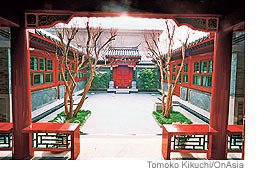
A Piece of History: An American owner restored this traditional Beijing courtyard house.
News Corp.'s Rupert Murdoch and his wife, Wendi, who was born in China, were recently involved in negotiations for one of these houses on one of the most exclusive streets in China, a block east of the Forbidden City's moat, though Mr. Murdoch says he has not made a purchase. Brokers say Jerry Yang, founder of Yahoo Inc., and former Goldman Sachs Group Inc. President John Thornton are both scouting for courtyards. Mr. Yang and Mr. Thornton didn't respond to requests for comment.
The wealthiest buyers are managing to fit swimming pools, satellite dishes and underground parking into the rigid, centuries-old design of the courtyard house. According to blueprints reviewed by The Wall Street Journal, the unfinished home the Murdochs looked at is designed to have a pool in one of two double-level basements, plus a game room with golf and billiards. Unlike traditional courtyards, which are built out of wood so carefully fitted that nails aren't needed, the seven-building compound is concrete. But its layout above ground is traditional, with both an inner and an outer courtyard.
Foreigners are pouring into Chinese megacities like Beijing and Shanghai -- there may be as many as half a million in Shanghai alone. For most Westerners in China, housing now comes down to a choice between a high-rise apartment downtown and an American-style house in a suburban gated community.
For a fortunate few in Beijing, however, the boxy courtyard houses known as siheyuan, or four-sided gardens, have become the ultimate real-estate status symbols. Buying one of these houses, which are miniature versions of Beijing's 14th-century palatial Forbidden City, is an arduous process that can require negotiating with as many as 30 families. Dozens of families were crammed into many of the houses during the Cultural Revolution, and unrelated families may still reside in various rooms of the same house or in makeshift shelters erected in the open courtyard. They are all entitled to compensation for moving out. That can make striking a deal to buy out the residents even harder than finding a property.
But would-be owners see the courtyard house as the epitome of Chinese domestic life, a link to 5,000 years of history that's worth the $1 million or more that French architect Pascale Desvaux says is the minimum price.
Ms. Desvaux and her husband Georges Desvaux, the head of consultancy McKinsey & Co. in China, live with their children in a simple courtyard. It is tucked into temple grounds that were set aside for the family of a Chinese emperor a century ago and later for Tibet's spiritual leader, the Dalai Lama.
That history makes Ms. Desvaux reluctant to tinker. Still, she changed the size of some doors and installed a passageway to link her daughters' bedroom to the main house. "This is a total fantasy, not a Chinese way of doing things," she says.
Historically, courtyard houses were located within Beijing's distinctive maze of narrow urban footpaths called hutongs. The courtyards' outer walls are built right along the street, so widening the hutongs means knocking down the houses. Fewer than 50 of these lanes are now protected from development.
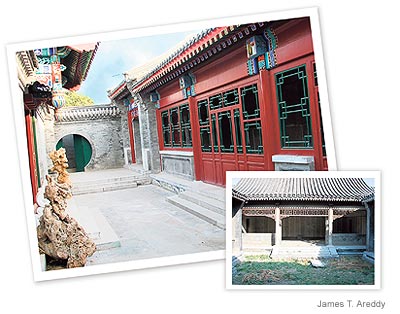
14th-Century Style: A new courtyard house, left, with traditional woodwork and painting. An unfinished pied-a-terre, below.
But the Beijing Municipal Government has strict guidelines that make restoration of courtyard houses an expensive proposition. You can't uproot trees, for example, and the size of windows is dictated. So is the kind of paint for the outer walls. And because many of the houses sit in neighborhoods that aren't hooked up to city sewer systems, running pipes for heating and toilets adds to the costs. Nevertheless, most Western buyers have managed to do extensive renovations, adding up-to-date plumbing and triple-paned windows.
When Pulitzer Prize-winning American photographer H.S. Liu first set eyes on a traditional Beijing courtyard house that was up for sale, it took him a mere 30 seconds to decide to buy it. Then he gutted it. "A lot of those rooms were totally worthless," he says. "I had to push it down." He followed convention by painting the outside walls with the requisite pig's blood, but he also put in a sauna and skylights over a stainless-steel kitchen.
"The scariest part was when they built the basement," says Mr. Liu. He worried that the digging might hit one of the tunnels that Chinese leaders are rumored to use to whisk around town. Now he has a movie-screening room. Mr. Liu left untouched the courtyard's 100-year-old pomegranate trees; at garden parties each fall, he mixes their rosy fruit into martinis.
American lawyer Laurence Brahm has lived in China since the 1980s and owns three courtyards, one of them a hotel. He boasts that "aside from the piping, the electricity and the heating, everything else is original." Except, of course, for the bar he put into an underground bomb shelter that was probably once a septic tank.
He says guests at the Red Capital Residence hotel in one of his courtyards -- the "East Concubine Suite" goes for $190 a night -- often ask him for help in wading through bureaucracy so they can buy their own siheyuan. "I just say, 'No. Good luck,' " Mr. Brahm says.
A classic courtyard embodies principles of feng shui. You enter through a red gate that opens onto a solid wall meant to block bad spirits. A zigzag brings a visitor to buildings arranged in a U-shape around the outer courtyard. Blood-red pillars and gray bricks support squat tiled roofs edged with a latticework in bright green, blue and gold, with figures of flowers and birds.
To go from one room to another, you must step out onto the uncovered courtyard, a chilly proposition during the brutal north China winter. But it's also part of the appeal. Says Hong Kong architect Kamwah Chan: "Your feet are on the ground and you look up to the heavens."
--Kersten Zhang contributed to this article.
Write to James T. Areddy at james.areddy@wsj.com
Western executives are fueling an unusual scramble for high-end housing in Beijing
By JAMES T. AREDDY
December 3, 2005; Page P1
BEIJING -- Westerners have pumped billions into China's economy over the past few years. Now they want a tony address.
The growing presence of executives from abroad in China is fueling an unusual real-estate scramble. In an Asian twist on the pied-à-terre, wealthy and influential foreigners are paying a premium for traditional-style houses here that many Chinese regard as too cramped and too old-fashioned. Known as courtyard houses, they have been razed by the thousands in recent years, and only 3,000 remain in Beijing. Mao Zedong lived in a courtyard and so do many of today's Chinese leaders.

A Piece of History: An American owner restored this traditional Beijing courtyard house.
News Corp.'s Rupert Murdoch and his wife, Wendi, who was born in China, were recently involved in negotiations for one of these houses on one of the most exclusive streets in China, a block east of the Forbidden City's moat, though Mr. Murdoch says he has not made a purchase. Brokers say Jerry Yang, founder of Yahoo Inc., and former Goldman Sachs Group Inc. President John Thornton are both scouting for courtyards. Mr. Yang and Mr. Thornton didn't respond to requests for comment.
The wealthiest buyers are managing to fit swimming pools, satellite dishes and underground parking into the rigid, centuries-old design of the courtyard house. According to blueprints reviewed by The Wall Street Journal, the unfinished home the Murdochs looked at is designed to have a pool in one of two double-level basements, plus a game room with golf and billiards. Unlike traditional courtyards, which are built out of wood so carefully fitted that nails aren't needed, the seven-building compound is concrete. But its layout above ground is traditional, with both an inner and an outer courtyard.
Foreigners are pouring into Chinese megacities like Beijing and Shanghai -- there may be as many as half a million in Shanghai alone. For most Westerners in China, housing now comes down to a choice between a high-rise apartment downtown and an American-style house in a suburban gated community.
For a fortunate few in Beijing, however, the boxy courtyard houses known as siheyuan, or four-sided gardens, have become the ultimate real-estate status symbols. Buying one of these houses, which are miniature versions of Beijing's 14th-century palatial Forbidden City, is an arduous process that can require negotiating with as many as 30 families. Dozens of families were crammed into many of the houses during the Cultural Revolution, and unrelated families may still reside in various rooms of the same house or in makeshift shelters erected in the open courtyard. They are all entitled to compensation for moving out. That can make striking a deal to buy out the residents even harder than finding a property.
But would-be owners see the courtyard house as the epitome of Chinese domestic life, a link to 5,000 years of history that's worth the $1 million or more that French architect Pascale Desvaux says is the minimum price.
Ms. Desvaux and her husband Georges Desvaux, the head of consultancy McKinsey & Co. in China, live with their children in a simple courtyard. It is tucked into temple grounds that were set aside for the family of a Chinese emperor a century ago and later for Tibet's spiritual leader, the Dalai Lama.
That history makes Ms. Desvaux reluctant to tinker. Still, she changed the size of some doors and installed a passageway to link her daughters' bedroom to the main house. "This is a total fantasy, not a Chinese way of doing things," she says.
Historically, courtyard houses were located within Beijing's distinctive maze of narrow urban footpaths called hutongs. The courtyards' outer walls are built right along the street, so widening the hutongs means knocking down the houses. Fewer than 50 of these lanes are now protected from development.
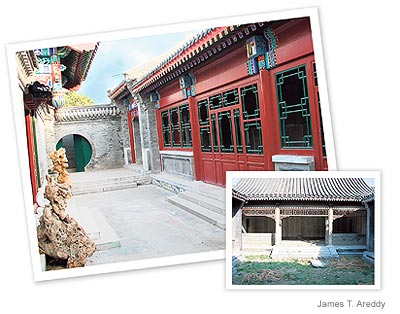
14th-Century Style: A new courtyard house, left, with traditional woodwork and painting. An unfinished pied-a-terre, below.
But the Beijing Municipal Government has strict guidelines that make restoration of courtyard houses an expensive proposition. You can't uproot trees, for example, and the size of windows is dictated. So is the kind of paint for the outer walls. And because many of the houses sit in neighborhoods that aren't hooked up to city sewer systems, running pipes for heating and toilets adds to the costs. Nevertheless, most Western buyers have managed to do extensive renovations, adding up-to-date plumbing and triple-paned windows.
When Pulitzer Prize-winning American photographer H.S. Liu first set eyes on a traditional Beijing courtyard house that was up for sale, it took him a mere 30 seconds to decide to buy it. Then he gutted it. "A lot of those rooms were totally worthless," he says. "I had to push it down." He followed convention by painting the outside walls with the requisite pig's blood, but he also put in a sauna and skylights over a stainless-steel kitchen.
"The scariest part was when they built the basement," says Mr. Liu. He worried that the digging might hit one of the tunnels that Chinese leaders are rumored to use to whisk around town. Now he has a movie-screening room. Mr. Liu left untouched the courtyard's 100-year-old pomegranate trees; at garden parties each fall, he mixes their rosy fruit into martinis.
American lawyer Laurence Brahm has lived in China since the 1980s and owns three courtyards, one of them a hotel. He boasts that "aside from the piping, the electricity and the heating, everything else is original." Except, of course, for the bar he put into an underground bomb shelter that was probably once a septic tank.
He says guests at the Red Capital Residence hotel in one of his courtyards -- the "East Concubine Suite" goes for $190 a night -- often ask him for help in wading through bureaucracy so they can buy their own siheyuan. "I just say, 'No. Good luck,' " Mr. Brahm says.
A classic courtyard embodies principles of feng shui. You enter through a red gate that opens onto a solid wall meant to block bad spirits. A zigzag brings a visitor to buildings arranged in a U-shape around the outer courtyard. Blood-red pillars and gray bricks support squat tiled roofs edged with a latticework in bright green, blue and gold, with figures of flowers and birds.
To go from one room to another, you must step out onto the uncovered courtyard, a chilly proposition during the brutal north China winter. But it's also part of the appeal. Says Hong Kong architect Kamwah Chan: "Your feet are on the ground and you look up to the heavens."
--Kersten Zhang contributed to this article.
Write to James T. Areddy at james.areddy@wsj.com
Friday, December 02, 2005

French Soldier: I don't want to talk to you no more, you empty headed animal food trough wiper. I fart in your general direction. Your mother was a hamster and your father smelt of elderberries.
Sir Galahad: Is there someone else up there we could talk to?
French Soldier: No, now go away before I taunt you a second time.
Subscribe to:
Posts (Atom)